Posted on — Leave a comment

SIGN2Inclusion Closes with a Landmark Final Meeting and Conference in France 

SIGN2Inclusion Closes with a Landmark Final Meeting and Conference in France

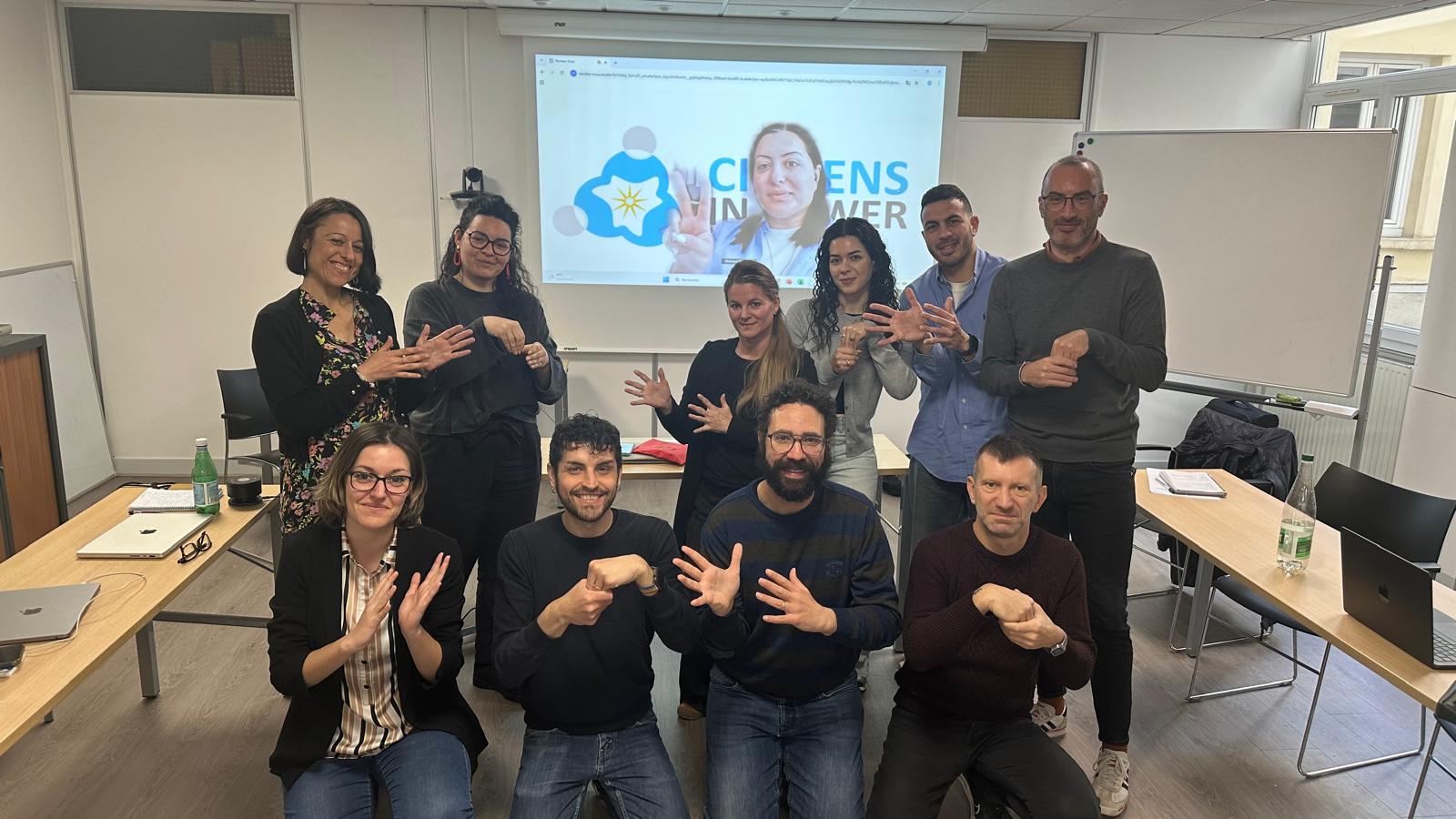
After 28 months of collaborative research, creative development, and community engagement across France, Italy, and Cyprus, the SIGN2Inclusion project proudly celebrated its conclusion with a Final Transnational Partner Meeting and a Final Conference hosted in CNRS offices in Pars, France. The event brought together more than 50 attendees including project partners, educators, researchers, Deaf community members, students, parents, linguists, and policy stakeholders to reflect on the journey, share the outcomes, and chart the path forward. 

A Fitting Close to a Transformative Journey 

The Final Conference was, by every measure, a tremendous success. Partners from CNRS, Fondazione Istituto dei Sordi di Torino, Università degli Studi di Torino, RITE, Citizens in Power, and ANPES came together alongside teachers of the Deaf, Deaf researchers, secondary educators, teachers of the deaf, and community advocates to celebrate what had been achieved together. 

To ensure full accessibility and meaningful participation for everyone in the room and online, The event was supported by two teams of professional interpreters: one providing International Sign/English for our transnational audience, and one providing French Sign Language (LSF)/International Sign (IS) for local participants and the wider French Deaf community. Conversations flowed naturally across languages, modalities, and cultures exactly the kind of inclusive space the project was designed to champion. 

Deafness as Identity, Not Deficit 

A guiding principle throughout SIGN2Inclusion and one that shone through at the Final Conference has been our commitment to recognising deafness as a rich cultural and linguistic identity rather than framing it through a lens of deficit. Sign languages are full, natural languages. Deaf communities carry their own heritage, values, and ways of knowing. Throughout the project, Deaf researchers, project managers, teachers, and students were not simply participants but co-creators, shaping every phase of the work from needs assessment to lexicon creation to the design of the Virtual Museum. 

This identity-affirming approach informed the way we selected terminology, recorded sign language videos, built pedagogical materials, and engaged with schools and families. It is, we believe, one of the most important legacies the project leaves behind. 

Project Outputs: Freely Available, Built to Last 

All of the project’s outputs are now openly accessible on our website https://sign2inclusion.com/ and attendees at the Final Conference had the opportunity to explore, test, and engage with them directly. The main deliverables include: 

  • The SIGNup Pedagogical e-Guidebook for teachers of the Deaf, offering practical methods for introducing new signed terminology in secondary STEM classrooms. 
  • The “Accepting the Signs” Needs Assessment Report, a scientific study on DHH communities’ access to Environment and Emerging Technologies terminology across partner countries. 
  • The SIGN2Inclusion Multimodal Lexicon, featuring over 60 new terms in Environment, Climate Change, and Emerging Technologies each presented with sign language videos, visuals, and accessible text in French, Italian, Cypriot, and International contexts. 
  • The SIGN2Inclusion Virtual Museum, an immersive, accessible 3D learning environment where DHH students can explore new terminology through interactive exhibits and phenomenon-based workshops. 
  • A peer-reviewed scientific publication comparing neologism creation strategies across three European sign languages. 
  • An Implementation Guide for schools and educators wishing to adopt the materials in their own classrooms. 

During the conference, participants engaged enthusiastically with each of these outputs; trying out the Virtual Museum, browsing through the Lexicon on their phones and laptops, and discussing how the resources could be adopted in their own schools, institutions, and communities. The energy in the room made clear that SIGN2Inclusion is not ending with this conference; it is entering a new phase of life in the hands of teachers, students, and Deaf communities across Europe. 

Looking Ahead 

The partnership extends warm thanks to every educator, interpreter, researcher, student, and family member who contributed to the project. The materials will remain freely available on sign2inclusion.com, and partner organisations are committed to continuing the work of making STEM education genuinely accessible and affirming for Deaf and Hard of Hearing learners across Europe. 

The conversation continues and everyone is invited to be part of it. 
Posted on — Leave a comment

Advancing Accessibility and Inclusion: The Role of Virtual Reality Technology for the Deaf Population 

Advancing Accessibility and Inclusion: The Role of Virtual Reality Technology for the Deaf Population

Recent technological developments have underscored the potential of virtual reality (VR) to address persistent barriers faced by Deaf and Hard-of-Hearing (DHH) individuals in educational, cultural, and social contexts. Conventional teaching methods and non-formal learning environments often do not align with the primary visual communication modalities of DHH learners, contributing to gaps in comprehension, engagement, and equitable access to information. VR technology offers an alternative paradigm that privileges visual and multimodal communication channels, thereby advancing accessibility and participation. 

Enhanced Educational Outcomes with Immersive VR 

One of the most documented applications of VR is in the domain of sign language education. Traditional text- or video-based methods frequently fail to represent the spatial and three-dimensional nature of sign languages, limiting linguistic acquisition. Systematic evidence indicates that immersive VR environments integrating interactive sign language avatars and real-time feedback can substantially improve learner engagement and performance. For example, comprehensive reviews of VR-based sign language education highlight how AI-augmented gesture recognition and interactive virtual scenarios support communicative practice and improve retention compared with static pedagogical tools. This body of research encompasses over fifty peer-reviewed studies and confirms that immersive VR systems yield measurable improvements in learning outcomes for DHH users. (Guzman et al., 2025) 

Quantitative evaluations further demonstrate that VR can increase academic performance in spatial and visual subjects. Reported improvements in test scores range from approximately 15 to 30 % when learners engage with immersive sign language avatars that translate lecture content in real time. These gains reflect not only enhanced comprehension but also sustained cognitive engagement facilitated by an environment that aligns with visual learning preferences. 

Accessibility in Non-Formal Contexts 

Beyond formal education, VR also enhances access in cultural and informal learning spaces such as museums and public exhibitions. Immersive VR applications can embed features like 360˚ visual signage and multimodal interaction tools that enable DHH visitors to navigate content autonomously. These design features augment comprehension and engagement for users who might otherwise encounter informational barriers in auditory-centric environments. 

A recent scoping review mapping VR and augmented reality (AR) use among deaf and hard-of-hearing populations in non-formal education found that immersive subtitling and multimodal interaction were prominent accessibility features. Outcomes reported across included studies encompass increased participation, satisfaction, and autonomy in learning experiences outside the classroom. (Gonzalez-Afonso et al., 2026)https://www.frontiersin.org/journals/education/articles/10.3389/feduc.2025.1715885/full?utm_source=chatgpt.com 

User-Centred Improvements in VR System Design 

Usability evaluations conducted with DHH participants reinforce the importance of tailoring VR experiences to sensory needs. Trials involving sound modifications and alternative haptic or visual cues have been positively received, confirming that adaptive sensory design increases both accessibility and user satisfaction. For example, a user study with ten DHH individuals indicated that when audio-dependent environmental cues were supplanted or supplemented with visual/haptic signals, the overall usability of the VR environment improved appreciably. These findings suggest that inclusive sensory configurations are essential for equitable VR experiences. 

Broader Implications and Future Directions 

The integration of VR technology within DHH-focused applications aligns with broader trends in assistive technology that privilege multisensory access and user autonomy. Immersive technologies are increasingly seen as a vehicle to mitigate communication barriers that have historically constrained educational, cultural, and social participation for DHH individuals. 

Integrating VR technology with initiatives such as Sign2Inclusion foregrounds an inclusive educational infrastructure that privileges the linguistic rights and STEM engagement of DHH learners. These efforts converge on enhancing democratic participation, expanding educational equity, and fostering a structurally accessible pathway for DHH individuals to attain complex subject knowledge without reliance on auditory access. In this context, VR is not merely an assistive accessory but a scalable modality that enriches accessibility practices and amplifies the pedagogical reach of sign-based communication frameworks within formal and informal learning environments. 

Posted on

Deaf Art, winter gatherings and why moments like this matter for SIGN2Inclusion 

Deaf Art, winter gatherings and why moments like this matter for SIGN2Inclusion

Step into the Winter Party at the Turin Institute for the Deaf, and you feel it immediately: this is not a side programme, not a token “cultural add-on.” Deaf Art takes center stage. 

The Winter Party is a beloved tradition at the Institute. Every year, on the Wednesday before Christmas, the school’s young Deaf students put on their classic holiday performances, greet their parents, and take part in meetings that create a sense of community: a moment to collaborate, celebrate, and share festive wishes. 

Over the past four years, the Institute’s Academy Department has transformed the Winter Party into a major event for the wider Deaf community. Now it’s more than just a school celebration: it features hands-on workshops, seminars, conferences, stands, collaborative activities, and even a shared dinner. These moments have become crucial opportunities for Deaf adults across Italy to meet, exchange information, and strengthen community ties. 

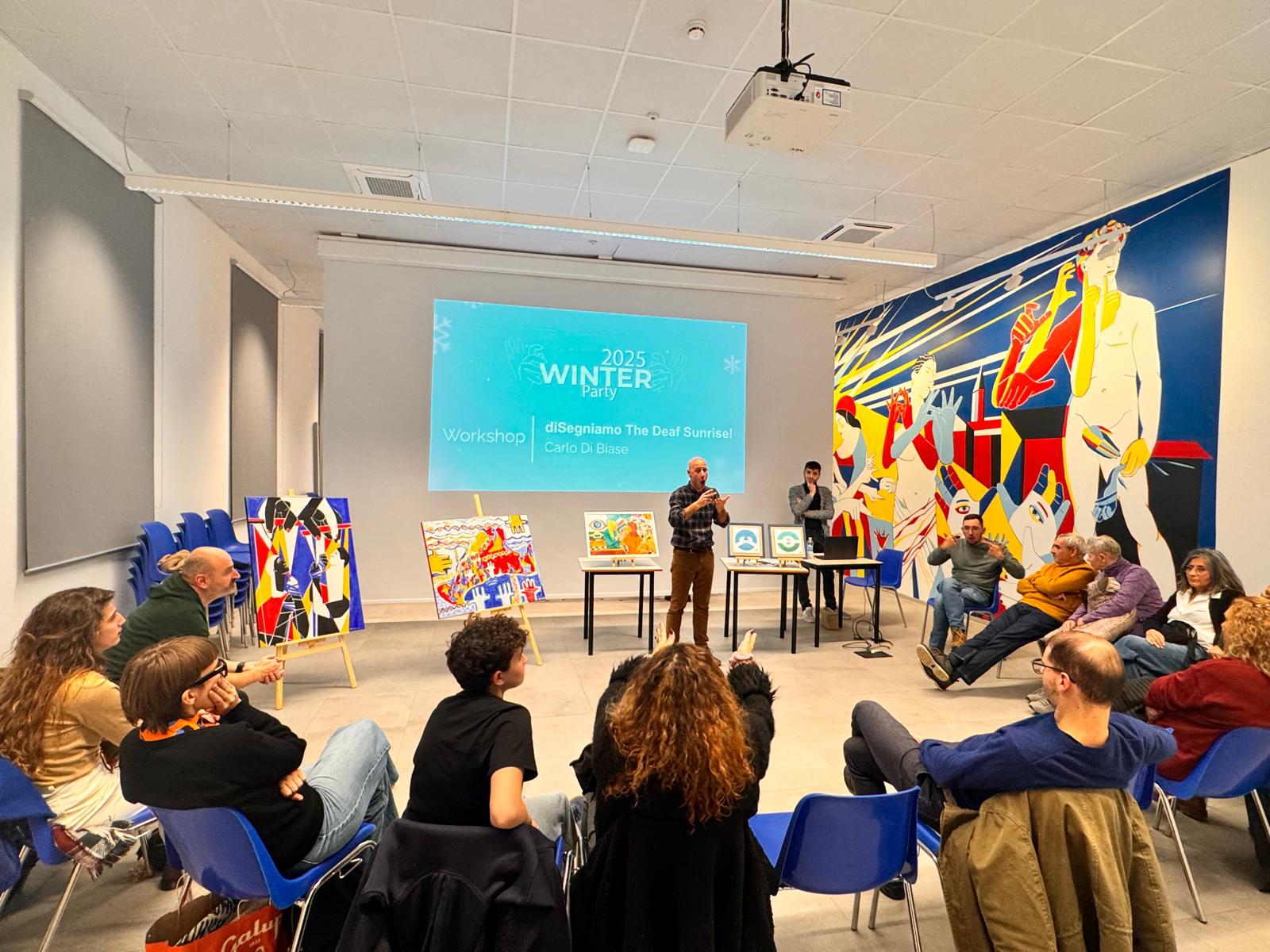
At Winter Party 2025, art was everywhere. Exhibits invited viewers to linger, workshops offered hands-on experiences, and lively conversations circled around the stands. The event wasn’t just about watching, it was about engaging, asking questions, laughing, commenting, and creating meaning together. 

Gatherings like this are more than celebrations; they are small, real-world laboratories for accessibility, participation, and community-led innovation. For SIGN2Inclusion, they are also one of the best settings to do something that truly matters: share progress directly with Deaf people, listen closely, refine ideas, and keep the project grounded in the community it is meant to support. 

Events like the Winter Party show how art and culture can bring people together, empower the Deaf community, and spread awareness far beyond the school walls: connecting parents, students, and the broader public in shared understanding and celebration. 

So, what do we mean by Deaf Art? 

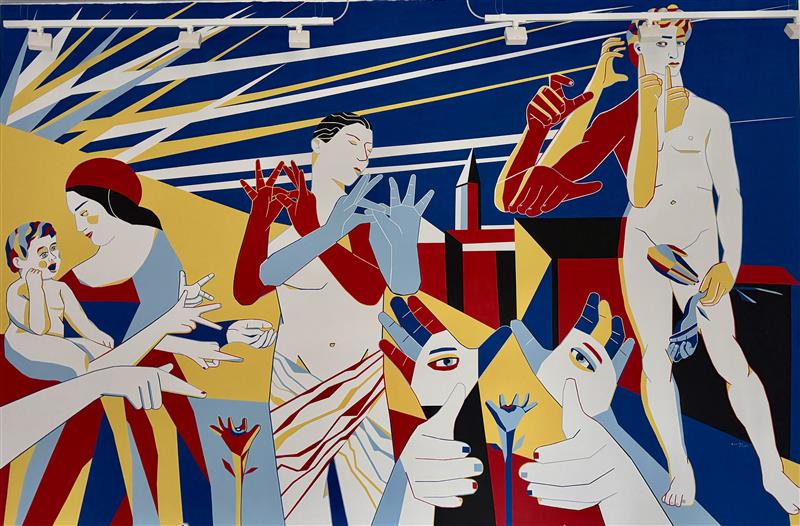
“Deaf Art” is often used as an umbrella term, and in practice it covers a wide landscape: art made by Deaf artists, art shaped by sign languages and Deaf culture, and art that speaks from Deaf experience. 

Within that landscape, one influential term is De’VIA (Deaf View/Image Art), coined in 1989 to name a genre of work that intentionally represents Deaf experiences and Deaf culture. It matters because it gives language to something many people recognise instinctively: there are artworks that don’t just happen to be made by Deaf artists, but are rooted in Deaf ways of seeing the world. 

De’VIA is not “a style.” It is more like a position an artist can take. Sometimes it leans into affirmation: pride, language, community, beauty, humour, belonging. Other times it pushes into resistance: audism, oppression, medicalisation, language deprivation. Either way, the aim is not to collapse Deaf identity into hearing loss. It is to make visible the cultural, linguistic, and political dimensions of being Deaf. The philosophy of De’VIA underlines that Deaf art is both expressive and intentional, shaping narratives that are culturally grounded, politically aware, and linguistically centred. 

In 2009, the French movement of Surdism further expanded this vision, emphasising that Deaf experiences and identities are not marginal but central to artistic and social expression. Surdism challenges dominant cultural norms and insists on Deaf cultural autonomy in arts and performance. Building on these ideas, Artivism: exemplified by initiatives such as Surdists United, fuses art with activism, using creative practices to highlight social issues affecting Deaf communities and to foster cultural and political visibility. 

Look again at the Winter Party photos and you can feel that standpoint. The work is vibrant and unapologetically visual. The atmosphere is not “translated” for Deaf people after the fact. Deaf ways of seeing, communicating, and gathering are simply assumed. The influence of De’VIA, Surdism, and Artivism is visible: pride, resistance, creativity, and cultural identity are intertwined, shaping art that is lived, shared, and felt by the community. 

Deaf Gain: changing the story from “lack” to value 

There is a reason Deaf Art often feels like a reset button for audiences, even for those who have engaged with accessibility before. Deaf Studies has long challenged deficit-based narratives and one key concept here is Deaf Gain, which reframes deafness not as loss, but as a source of cognitive, creative and cultural contribution. 

When a community event foregrounds Deaf creativity, that reframing becomes tangible. Deaf culture stops being treated as a “special need” to accommodate and starts being recognised as a world-making practice with its own aesthetics, politics, jokes, innovations and social energy. 

A Winter Party like this quietly changes the default setting. It doesn’t ask “how do we include Deaf people?” It shows what happens when Deaf people are already centred, already in dialogue, already producing culture on their own terms. 

Sign language as an artistic medium, not just a tool 

One of the easiest traps for hearing institutions is to treat sign language as purely functional: interpretation for access, captions as compliance. Deaf Art pushes back, not with a manifesto, but with a lived reality. Sign languages are not only tools. They are artistic media: embodied, rhythmic, spatial, and poetic. 

A classic example is sign language poetry, where movement, handshape, facial expression, and spatial composition create metre, visual rhyme, and narrative perspective. Scholars and artists such as Clayton Valli helped establish critical recognition of that aesthetic craft. 

Seen through that lens, a Deaf Art workshop at Winter Party is not simply “making art”. It is also a language space. Meaning is built visually and collectively, in ways that can travel across different sign languages and cultural backgrounds. People don’t just receive content. They co-create it, respond to it, reshape it. 

Deaf Art spans multiple artistic fields: performing arts, audiovisual arts, visual arts (painting, sculpture, drawing, photography, digital art, illustration, etc.), architecture, literary arts (jokes/humor, novels, short stories, comics, cartoons, visual vernacular, poetry, nursery rhymes, songs, visual rhythm, dance, theatre, performance, ABC and numbers stories), musical arts, applied arts, and design. All these forms involve the Deaf community, highlighting Deaf talent, sign language, Deaf identity, lived Deaf experience, Deaf culture, memory and history, audism, and Deafhood. 

Indeed, this year’s workshops are organized to reflect these diverse expressions. Examples include translating the theatrical text of Lorenzo Laudo in collaboration with the Deaf theatre company from Rome, “Laboratorio Zero”, and “diSegniamo – the Deaf Sunrise” with Carlo Di Biase, an expert Deaf guide. Other activities include “Colors of the Deaf Community”, where participants paint works dedicated to DeVia, and Visual Rhythm workshops led by two young Deaf experts, Gabriella Grioli and Ambra De Caro. Finally, there is SLAM, a visual improvisation practice translated into sign language as an art form, including poetry, visual rhythm, visual vernacular, mime, and storytelling. 

Finally, it’s worth remembering that Deaf Art is not only something we show — it’s something we do together. When a space is designed for visual connection, when sign languages are centred, and when Deaf creativity sets the tone, participation stops being a checkbox and becomes the natural state of things. For SIGN2Inclusion, moments like these are a reminder of the project’s real purpose: not simply producing outputs, but building resources that are shaped with the community, tested in real contexts, and ready to live beyond the project timeline in classrooms, cultural spaces, and everyday Deaf life. 

Written by Gabriele Uzzo and Nicola della Maggiora

Posted on — Leave a comment

Signs, Identity, Knowledge: Growing Together within the Deaf Community

Signs, Identity, Knowledge: Growing Together within the Deaf Community

Every year on 23 September, we celebrate the International Day of Sign Languages, a day established by the United Nations General Assembly in 2017 to give proper recognition to Sign Languages, considered a vital part of the culture, identity, and rights of Deaf people. This date also marks the anniversary of the founding of the World Federation of the Deaf (WFD), a symbol of the global fight for the human, linguistic, and cultural rights of the Deaf community.

Sign Language is much more than a simple means of communication: it is the beating heart of our identity and culture. Through it, we learn, share experiences and knowledge, build relationships within the community, and pass on values to new generations. Celebrating this day means valuing our language and recognising the right of every Deaf person to receive an education in their own language.

For young Deaf people, access to educational materials in Sign Language is essential. It enables them to grasp complex concepts, participate actively in learning, and develop scientific and technological skills. Educating in our language means ensuring equal opportunities for study, growth, and personal fulfilment.

But Sign Language is alive and constantly evolving. With the advancement of science and technology, new ideas emerge that require new signs. Projects such as Sign2Inclusion move precisely in this direction, developing signs related to ecology, biodiversity, renewable energy, digital technologies, and many other fields.

However, these new signs can only become part of the language if they are shared and embraced by the Deaf community. Each of us has a key role to play: using, teaching, and sharing new signs means strengthening the language, empowering younger generations, and building a shared heritage of knowledge and belonging.

The International Day of Sign Languages reminds us how essential the right to education, learning, and knowledge is – rights that find expression through our language. Every day, we have the opportunity to make Sign Language stronger, richer, and more inclusive, giving everyone the chance to explore, understand, and actively participate in the world around us.

Together, we can spread knowledge, pride, and inclusion: valuing our language also means valuing our identity and the future of the Deaf community.

By Nicola Della Maggiora

Posted on — Leave a comment

Empowerment of deaf people 

Empowerment of deaf people

In recent decades, the concepts of equality and equity have often been used in relation to individuals and groups belonging to the same social class who are disadvantaged both medically and socially. 

Note that the two concepts, while similar, are different. The first aims to offer a right, a concession, a service for all, without distinctions based on individual or collective diversity. 

Let’s take an example from a phrase in Article 3 of the Italian Constitution, which states “the law is equal for all.” Given the context, every person and all communities present itself as equal to another person/collective. The reflection is that we cannot be equal in the diversity of each person or collective. A rich person is not equal to a poor person in economic terms; the rich person can rely on renowned lawyers or groups of lawyers, while the poor person can rely on only one lawyer and will not have a wide choice of lawyer. 

The concept of fairness, on the other hand, refers to the rendering of justice, that is, the ability to take into account particularities and differences, referring to the possibility of making a decision independent of the application of an abstract norm. 

The aforementioned concept of equity introduces many other concepts. In terms of time and space, I introduce here two concepts closely related to the project itself, relating to the deaf and deaf-blind community: Inclusion and Empowerment. 

Inclusion 

Referring to the first term above, this article focuses specifically on school inclusion and refers to a teaching strategy aimed at involving and involving all students in a class, with the goal of maximizing the learning potential of the entire class, including “different” students. 

Referring to other blog posts in this project, we emphasize that, with regard to the inclusion of deaf students, it is important to emphasize communication and, consequently, the language used, taught, and discussed during lessons: sign language for the deaf and tactile sign language for the deaf-blind. 

By using the most appropriate communication method for the various subjects, we are INCLUDING them in the appropriate context, namely the school context. 

Empowerment 

The term empowerment can be applied in various fields, from politics to psychology, from economics to sociology. A general definition is provided below: empowerment, or self-empowerment, can be described as a path to gaining power, understood as control over one’s life, allowing one to make decisions to achieve one’s goals, draw on one’s resources, and fully express one’s potential. 

Applying the concepts of inclusion and empowerment to the Deaf community, a linguistic and cultural minority community, it becomes clear that strengthening the equity of individuals through inclusion (and beyond) empowers both them and the community to which they belong. 

In conclusion, I quote a paragraph from Yasiris Gomez regarding empowerment in schools: 

When we give them access to education in an environment that understands and supports their needs, we are allowing their talents and abilities to shine. We are not just teaching Deaf individuals, we are cultivating future leaders, innovators, and contributors to society. 

(Gomez, 2023) 

By Mirko Santoro (CNRS) 

Bibliography: 

Gomez Yasiris (2023/09/27) Inclusive Education: Empowering the Deaf Community. Available at: https://yasirisgomez.medium.com/inclusive-education-empowering-the-deaf-community-8064fe6d21ab  (Accessed 24 September 2025). 

Jankowski, K. A. (1997). Deaf empowerment: Emergence, struggle, and rhetoric. Gallaudet University Press. 

Mathews, E. S. (2020). Signs of equity: Access to teacher education for deaf students in the republic of ireland. Sign language studies, 21(1), 68-97. 

Peers, D. (2018). Sport and social movements by and for disability and deaf communities: Important differences in self-determination, politicisation, and activism. In The Palgrave handbook of Paralympic studies (pp. 71-97). London: Palgrave Macmillan UK. 

Smith, D. H., & Andrews, J. F. (2015). Deaf and hard of hearing faculty in higher education: Enhancing access, equity, policy, and practice. Disability & Society, 30(10), 1521-1536. 

Posted on

The Education of Deaf Children: A History of Struggles, Innovation, and Hope

The Education of Deaf Children: A History of Struggles, Innovation, and Hope

In the Beginning: Silence, Isolation, and Family Strategies 

Before the end of the 18th century, deaf children often lived on the margins of society. Within families, gestures were sometimes used to communicate, but these systems varied greatly from one household to another and were not recognized by the wider society. There was no organized education, and deaf children were often considered unteachable. They were deprived not only of instruction but also of social recognition and inclusion. 

A Turning Point in the 18th Century: The Birth of Deaf Education 

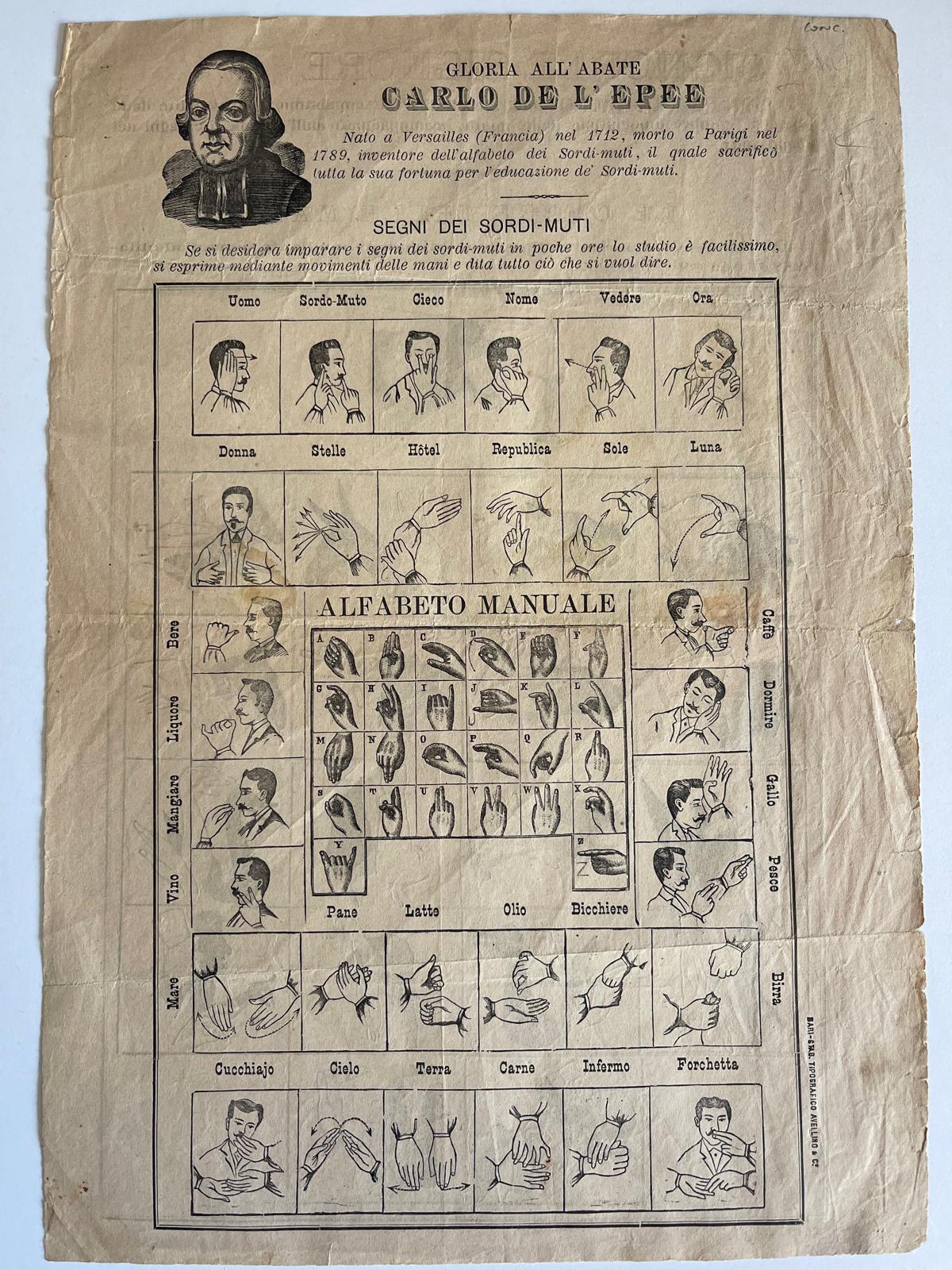
A decisive shift occurred at the end of the 18th century in France, thanks to Abbé Charles-Michel de l’Épée. Convinced that deaf children could learn, he developed a teaching method based on signs and founded the first free school for deaf youth in Paris. This marked the beginning of a structured and accessible visual pedagogy. His school became a model, and its influence quickly spread beyond France. 

In the following centuries, more schools were established in France and around the world. However, the history of deaf education has not followed a linear path. The Milan Congress of 1880 imposed a long era of strict oralism, during which sign languages were banned from schools in favor of speech and lipreading. This policy had severe consequences on the linguistic, educational, and identity development of many generations of deaf youth. 

Toward the Late but Essential Recognition of Sign Languages 

It wasn’t until the late 20th century that French Sign Language (LSF) began to regain ground in the educational space. In 1991, the Fabius law timidly introduced LSF into schools. It was only in 2005 that LSF was officially recognized as a full-fledged language in France. Today, more and more initiatives aim to offer bilingual pathways in schools: LSF and written French. 

The Role of Associations: Collective Mobilization and Pedagogical Innovation 

Several associations of parents and professionals have played—and continue to play—a crucial role in educational progress for deaf children. Organizations like 2LPE (Two Languages for One Education) actively campaign for the right to a bilingual education from an early age, supporting families and engaging in dialogue with public institutions. These organizations promote a truly inclusive school model, where LSF is not seen as an optional support, but as a fundamental right for deaf children. 

Their efforts include family support, public awareness, teacher training, and the promotion of educational models that respect the linguistic and cognitive needs of deaf learners. These associations often work in collaboration with deaf-led groups or networks such as Sign2Inclusion, to advocate for a shared vision of a fairer and more accessible education system. 

Bilingualism: A Key to Equal Opportunities 

Contrary to a still widespread belief, sign language does not hinder the learning of written French—on the contrary. Numerous studies show that early access to a complete visual language, such as LSF, fosters the cognitive, social, and linguistic development of deaf children. It provides a strong foundation for other types of learning, including reading and writing in French. 

Bilingualism in LSF and written French is therefore an educational choice that is both coherent and future-oriented. It allows deaf youth to develop dual literacy: the ability to express themselves in their natural (visual) language and to master written language, which is essential for social and professional life. 

Toward Truly Inclusive Education 

Inclusive education is not just about “placing” deaf children in hearing classrooms. It requires a real understanding of their specific needs: access to language, the presence of interpreters, teaching in LSF, trained educators, and appropriate pedagogical accommodations. It also calls for a change in perspective: viewing deafness not as a disability to be fixed, but as a difference to be valued. 

The history of deaf education is marked by struggles, setbacks, but also major victories. Thanks to the commitment of families, associations, and deaf communities themselves, many positive changes have taken place. The challenge remains immense, but the foundations are strong: to recognize the right to quality bilingual education, so that every deaf child can learn, thrive, and fully find their place in society. 

ANPES: A Committed Voice Since 1994 

Among the key players in this movement, the National Association of Parents of Deaf Children (ANPES), founded in 1994, works to amplify the voices of families. ANPES promotes a strong message: deaf children need education, not medical care. It advocates for full-time education in sign language within an adapted school environment, aiming to ensure that deaf children achieve an academic level equal to their peers. For more information about their work, visit www.anpes.fr. 

Posted on

SIGN2Inclusion Virtual Museum 

SIGN2Inclusion Virtual Museum

Virtual learning environments were reported to be beneficial for Deaf and Hard of Hearing (DHH) students in terms of inclusive, adaptive, and innovative learning experiences. El Ghoul and Othman (2022) assert that virtual environments facilitate improved learning processes since most physical and communicational obstacles that exist in face-to-face class environments are erased. Virtual environments allow DHH students to learn at their own pace, utilize assistive technological aids such as real-time captioning, transcripts, and sign language interpreting, and access a myriad of diverse resources based on their own individual requirements. 

These digital environments provide robust support for SL learning and ability building. Virtual environments, according to Chan, Santally, and Whitehead (2022), facilitate multimodal interaction through visual, textual, and interactive media and therefore provide an optimal environment for SL learning. Students can replay instructional material repeatedly, participate in graphically demanding discussions, and engage in content targeting receptive and expressive SL skills. 

In addition to academic success, e-learning also allows deaf or hard-of-hearing individuals to acquire basic 21st-century skills such as digital literacy, independent learning, and communication using virtual media. Virtual mediums’ flexibility and availability not only make education accessible but also provide greater autonomy and confidence among deaf or hard of hearing learners. 

The consortium of SIGN2Inclusion is currently working towards the development of an interactive nature of game-based media which will enhance students and teachers’ communication, fostering good learning processes and improving their cognitive skills and recall abilities. The development of the Virtual Museum will promote semantic learning and will also enable DHH students to develop sustainability competencies and environmental awareness in relation to the use of new technologies, whilst motivating them to become interested in STEM projects, initiatives, learning & careers. The Virtual Museum will enable direct interaction with content, transforming the paradigm in which DHH students experience new STEM concepts. 

Finally, to achieve this, partners will adapt the terms identified into interactive VM exhibits to establish possible linkages that can be beneficial not only for students’ interdisciplinary learning and career pathways, but also to enhance their creativity, STEAM knowledge, experience hands-on activities, and learn how to be advocates for themselves and their communities (Wickman 2020). 

Posted on

Theoretical Advancements in Sign Language Production 

Theoretical Advancements in Sign Language Production

Introduction 

Sign Language Production (SLP) is a crucial component in reducing communication barriers between Deaf and hearing societies. Recent advances in SLP (Rastgoo et al., 2024), driven by computer vision and deep learning, are driving the creation of novel solutions for automatic sign language translation. SLP is a crucial component of bidirectional sign language translation systems that include Sign Language Recognition (SLR). While SLR seeks to interpret sign language gestures into text or speech, SLP attempts to perform the reverse, converting spoken language into sign language through animated avatars or video synthesis (Camgoz et al., 2018). 

Despite the advancements in machine translation, the intricateness of sign languages presents unique challenges. Unlike spoken language, sign languages involve facial expressions, posture, and hand signs, and direct one-to-one translating is difficult (Saunders et al., 2020). Additionally, sign languages lack written standard forms, further complicating translation (Duarte et al., 2020).  

Key Developments in Sign Language Production 

1.Neural Machine Translation Approaches (NMT) 

Neural Machine Translation methods have been employed in sign language translation. Sequence-to-sequence models specifically employ recurrent neural networks (RNNs), transformers, and attention mechanisms to translate spoken language text into sign gloss sequences (Stoll et al., 2020). As opposed to the conventional rule-based methods, NMT learns contextual dependencies and enhances translation fluency (Guo et al., 2018). 

Some of the most significant concerns in this area are the availability of data. Most publicly released sign language datasets, such as the RWTH-PHOENIX-Weather 2014T, are too homogeneous, limiting the generalizability of the SLP models (Camgoz et al., 2018). Data augmentation approaches have been suggested to counter this by others, for instance, synthetic data generation with the use of deep generative models (Saunders et al., 2020). 

2.Motion Graph and Animation-Based Approaches 

The second favorable innovation in SLP is around motion graph-based animation, in which data for motion capture is used to create realistic sign animation (Kovar et al., 2002). Motion graphs allow for continuous transition between gestures such as the animation becoming realistic and seamless. These approaches require immense amounts of annotated data and manual intervention and are thus less scalable than those derived from deep learning (Arikan & Forsyth, 2002). 

3.Avatar – Based Sign Language production  

Animated avatars remain a common method used in sign language processing (SLP), particularly in the fields of assistance technologies and educational materials. Such systems rely on motion capture data and linguistically annotated corpora to generate accurate sign sequences (Gibet et al., 2016). However, avatar movements often lack naturalness, resulting in reduced acceptability by native signers (McDonald et al., 2016). 

4.Transformer Models and Self – Attention Mechanisms  

The availability of transformer-based architectures, such as Skeletal Graph Self-Attention (SGSA), has made it easier for researchers to achieve higher fluidity in the generated sign gestures (Ben et al., 2021). The application of self-attention mechanisms allows for simultaneous handling of the spatial and temporal dependencies in the sign language to create more unified animations (Vaswani et al., 2017). 

Conclusion 

SLP is an evolving field that has experienced rapid progress through the integration of deep learning, generative models, and animation techniques. While current models demonstrate promising results, difficulties such as data scarcity, sign variability, and real-time synthesis must be addressed. Future advancements in multimodal AI, data augmentation, and efficient model architectures will be crucial in making SLP systems more efficient and accessible. 

Posted on

Deaf Culture 

Deaf Culture

By Enrico Dolza 

The debate over the medical model versus the social model of deafness mirrors a deeper controversy regarding the nature of deafness. This debate can be traced to different interpretative views, explainable through the two most prominent models of disability. The social model, which has gained increasing prominence in contemporary times, partly due to the revolutionary approach proposed by the UN Convention on the Rights of Persons with Disabilities (UNCRPD, 2006), finds a particularly powerful resonance in the condition of deafness. Unique among disabilities, deafness has generated fully-fledged human languages and a rich cultural framework comprising places, beliefs, myths, social norms, literature, theater, and poetry. 

In contemporary society, the Deaf community appears as a group experiencing undeniable fragmentation, due to the constant oscillation between sociocultural belonging and a medicalized perspective. One can be deaf in two ways: biologically, where the clinical-diagnostic dimension prevails, or socially, where identity takes precedence. 

In the latter case, the concept of disability is openly deconstructed, and deafness becomes essence rather than deviance. Social Deafness typically includes families entirely or almost entirely composed of Deaf individuals, sometimes spanning several generations. For these Deaf parents, the birth of a Deaf child is not a cause for concern. Communication within the family is facilitated by the widespread and fluent use of sign language as the native tongue of the entire household. These families’ perception is rooted not in the idea of disability but in their identity, often accompanied by pride: Deafness and sign language are not phenomena to hide but rather to cherish and share. 

Much like linguistic and cultural minorities, Deaf individuals advocate for the recognition and right to use their language, asserting the need for accessible public services, schools, media, and culture. They share with certain groups of hearing allies (particularly CODAs – Children of Deaf Adults – interpreters, professionals, family members, and friends) a language, traditions, myths, social norms, places of gathering and socialization, and mechanisms for reproducing their community’s identity. 

Disability or identity? These are two opposing social constructs of deafness. On one hand, there is medicalization, where deafness is viewed as a deficiency that necessitates restoring the faculties of hearing and speech. On the other hand, there is the perception of deafness as a minority, as an ontological difference, a distinct way of being in and relating to the world, with the assertion, defense, and promotion of linguistic and cultural uniqueness. 

In the social model proposed by Deaf Studies, Deaf individuals may, but are not required to, be included in hearing society. Such inclusion is conditional upon Deaf individuals not losing their linguistic and cultural identity, which must be protected, preserved, and valued. 

Deafhood refers to the comprehensive acceptance of one’s deafness, coupled with a profound awareness of belonging to a unique culture with its own values, meeting spaces, literary and aesthetic productions, and, crucially, a unifying language: sign language. Coined by Paddy Ladd, a Deaf scholar at the University of Bristol, the term contrasts with “deafness,” which focuses on hearing loss. Deafhood shifts the narrative toward a positive understanding of being Deaf, emphasizing it as a cultural condition rather than a medical one to be “cured.” Ladd’s seminal work, Understanding Deaf Culture: In Search of Deafhood (2003), argues that Deaf communities are reservoirs of social and linguistic resources capable of challenging the “audiocentric” assumptions of Western society. Deafhood aligns Deaf identity with linguistic and cultural minorities, situating it within broader studies of multilingualism and minority cultures. It calls for the dismantling of colonialist structures imposed by hearing society, such as rehabilitation centers, and envisions a future where sign languages are integrated into mainstream education, fostering a bilingual society that respects Deaf cultural identity. 

Audism is the form of ableism specifically targeting the Deaf world. Ableism refers to discriminatory attitudes toward people with disabilities, justified by the presence of physical or mental limitations that lead to differential treatment, devaluation, or exclusion. Audism represents the specific form of discrimination against the Deaf Community: a prejudice whereby hearing individuals deem themselves superior simply by virtue of being hearing and mastering the oral language of their country. The term was coined in 1975 by Tom L. Humphries and represents the conceptual framework that views deaf individuals as incapable and categorizes them as disabled, leading to the devaluation of sign languages, often dismissed as mere pantomime or gestures devoid of linguistic meaning. Audist arguments are strongly phonocentric, based on the implicit premise that human languages are solely those spoken or written by hearing communities. Since thought is seen as uniquely human and dependent on language, those without it are perceived as less than fully human. In the audist framework, only oral language can render us fully human. 

Beyond Deafhood and Audism, the Deaf community has also developed other theoretical constructs, such as Deaf Gain and Deaf-Same. 

Deaf Gain explores the advantages of being deaf and the contributions of Deaf individuals and communities throughout history that have enriched humanity as a whole. The concept was first mentioned by Aaron Williamson, a Deaf artist, who questioned why, as he was about to lose his hearing at age seven, no doctor had told him he was gaining deafness rather than losing hearing. This idea was later revisited in 2009 and more fully developed in 2015 by H-Dirksen Bauman and Joseph Murray, both experts in Deaf Studies at Gallaudet University. The ideological framework assumes that Deaf people, often seen by hearing society as lacking a sense, have made significant contributions to human experience. According to Deaf Gain, society should be viewed as an ecosystem sustained by biodiversity, where the health of the social ecosystem is measured by the diversity of cultures, bodies, minds, and languages. A healthy ecosystem should, therefore, include the linguistic and sensory diversity brought by Deaf individuals. 

Deaf-Same, explored by Kusters and Friedner in 2015, investigates Deaf universalism and questions how much the dimension of deafness overrides all others, leading Deaf people to see themselves as part of one global community united by the notion: “I am Deaf, you are Deaf, and therefore we are the same.” Deaf-Same emphasizes the shared experience of being Deaf as transcending geography, culture, race, religion, and class. It creates a sense of connection and underscores how easily Deaf people worldwide can understand each other through a mix of national sign languages, gestures, and International Signs. 

This theoretical framework supporting the notion of a distinct Deaf Culture is reflected in everyday practices. Deaf Culture thrives in various settings: bilingual schools, cultural and recreational associations, senior circles, Deaf Companies (businesses run by Deaf individuals, from traditional restaurants to modern tech start-ups), and sports groups. These spaces serve as hubs for socialization and cultural reproduction while also promoting awareness and appreciation of sign language and Deaf cultural values. 

Sign language undeniably serves as the cornerstone of the Deaf Community, embodying its identity while functioning as a dynamic medium for communication, cultural expression, and artistic innovation. It is far more than a practical tool; it is a vibrant symbol of unity, pride, and creativity within the community. In recent decades, sign language has fueled a remarkable array of artistic endeavors, including poetry, theater, performances, visual arts, film, and even rap, each showcasing the unique linguistic and cultural richness of the Deaf world. These creative expressions are not confined to local stages but have gained prominence at international events, such as Deaf theater festivals, art exhibitions, and film screenings. Such platforms not only celebrate the diversity of Deaf artistry but also foster a sense of shared identity, where the global Deaf communities come together to honor their language, heritage, and collective experiences. 

Posted on

Has Sign Language Always Existed? 

Has Sign Language Always Existed?

By Enrico Dolza

Sign language is typically associated with Deaf people, but in reality, it should be more broadly associated with humanity at large, as it has been used across various contexts and historical periods, even within different hearing communities. Think of the monastic sign languages of medieval Europe, the signa loquendi that accompanied vows of silence in many Benedictine and Trappist monasteries for centuries, or the sign languages of Native Americans used as a lingua franca among the plains to ensure mutual understanding between different groups. There are also the sign languages used by Australian Aborigines, tied to specific speech taboos or employed during hunting, when silence is crucial. 

But what do we know about the origins of sign languages? We know a lot and very little at the same time, but we can attempt a rather realistic reconstruction of the journey sign languages of the past have taken to reach us today. The presence of Deaf people communicating with various forms of gestural language is certain, as it appears in all ancient sources, including the Bible, Greco-Roman classics, and early Christian sources. All indications point to the presence of adult Deaf individuals, sometimes alone and sometimes in small groups, who used hand gestures to communicate with their interlocutors, despite lacking oral articulatory capabilities. 

However, it was necessary to wait until the Enlightenment and the opening of the world’s first school for the Deaf to see the emergence of the first modern sign languages. These languages are closely linked to the first institutes, which were not only places for educating the Deaf but also centers of socialization, aggregating for the first time in history a significant number of Deaf individuals in one defined space. These Deaf institutes essentially represented the first formal deaf space in history and enabled the creation and preservation, both socially and materially, of the Deaf community as we know it today. While early attempts to educate the Deaf date back to 16th and 17th century Spain, the world’s first true Deaf school was the Institut National de Jeunes Sourds de Paris (still in existence!), founded in 1778 by Abbé de l’Épée. The uniqueness of de l’Épée’s project lay both in its organizational model and its educational method. Unlike the one-on-one tutor-pupil model of previous Spanish attempts, the Parisian school was structured as a formal educational institution with a boarding component, where Deaf people could interact in one place, allowing their mimic-gestural communication to “explode” and evolve within one or two generations into a full-fledged sign language. 


This phenomenon occurred in Paris in the late 18th century. Abbé de l’Épée abandoned the oral methods of his predecessors and instead made sign language the primary tool of Deaf education. This practice continued for about a century until the controversial Milan Congress of 1880, which, in the full swing of positivism, mandated a return to oral education for the Deaf, effectively banning sign language use, at least in educational settings. It wasn’t until William Stokoe’s visionary studies, beginning in the late 1960s in the United States, that the linguistic value of sign languages was rediscovered. These studies, mirrored in Italy a few years later by Virginia Volterra, marked a significant shift. 

De l’Épée welcomed many young Deaf people into his new institution, some of whom likely already knew each other from their communities or family ties. These children brought what de l’Épée identified as “natural signs.” With his classical philosophical education, he had a clear hypothesis that signs could perform functions comparable to words, allowing him to see what others had either failed or refused to recognize for centuries—that Deaf people could communicate through visual-gestural channels and be understood through body and facial expressions and a repertoire of iconic signs often shared with and understood by hearing people. This wide range of spontaneous signs left him amazed and convinced him of the powerful potential of this form of communication for Deaf education. Soon, he formalized a new method of Deaf instruction, known as “methodical signs,” where he used natural sign language as a bridge to write French, adding his invented “signs” for all parts of speech present in French but absent in sign language. 

Through the use of natural signs combined with methodical signs, the French Sign Language emerged and quickly stabilized through a rapid process of creolization. French Sign Language served as a model for many other sign languages around the world. With some approximation, we might call French Sign Language the “Latin” of sign languages, as it is the oldest and most prestigious and has given rise to many other sign languages. This was possible due to de l’Épée’s generosity and enthusiasm, as well as his tireless outreach, which included hosting Deaf educators from other European countries and publishing two significant pedagogical works that remain foundational in the field of special education. 

Thanks to this openness, French Sign Language first influenced, or directly spawned, many European sign languages during the 19th century (with notable exceptions like British Sign Language and German Sign Language), and eventually American Sign Language, which has since spread in various forms to numerous countries in Africa, Southeast Asia, and Central and South America. 

But what were the “natural signs” that so astonished de l’Épée, and where did they come from? Although he couldn’t have known, we now know, thanks to contemporary linguists, especially those with an innatist perspective, that what de l’Épée observed are what we now call “home signs”—a precursor to sign languages. These home signs arise spontaneously in situations where Deaf children have no exposure to language, whether spoken (due to an inaccessible auditory environment) or signed (because unknown to their family). This results in an instinctive visual-gestural communication that gradually becomes grammaticalized, creating a primitive visual-gestural language with both lexical (signs in codified gestures) and syntactic elements, which form basic sentences. The result is that between the child and their closest interlocutors, an instinctive visual-gestural form of communication emerges, which gradually becomes grammaticalized, taking the form of a kind of primordial visual-gestural language. This includes not only lexical elements (i.e., individual signs in the form of codified gestures) but also syntactic elements, with which basic utterances are constructed—perhaps just one, two, or three terms, but still genuine sentences. Home signs, likely in even more elaborate forms than described so far, are almost certainly the sign languages observed in the past and mentioned in ancient sources. Perhaps even more than that, in some cases, these home signs might have evolved in the past to reach an evolutionary stage similar to what we know today as ‘Shared Sign Languages’ or ‘Village Sign Languages.’ These emerge spontaneously as an evolution of home signs, where the presence of Deaf people becomes the norm (typically due to the limited genetic diversity in such populations), and their numbers grow to represent a significant portion of the population. They are called ‘shared’ because they do not hold the status of languages exclusively for the Deaf; instead, these populations experience a balanced diglossic situation between spoken language and sign language, with the latter being used by the hearing population as well. 

So, have sign languages always existed? In practice, we could answer this with a resounding “Yes!” although, of course, many sign languages of varying evolutionary and complexity levels have emerged and disappeared over time, with only faint traces in historical sources. However, with the advent of Deaf education in the late 18th century, things changed drastically, and modern sign languages, as we know and study them today, began to take shape.