SIGN2Inclusion Closes with a Landmark Final Meeting and Conference in France
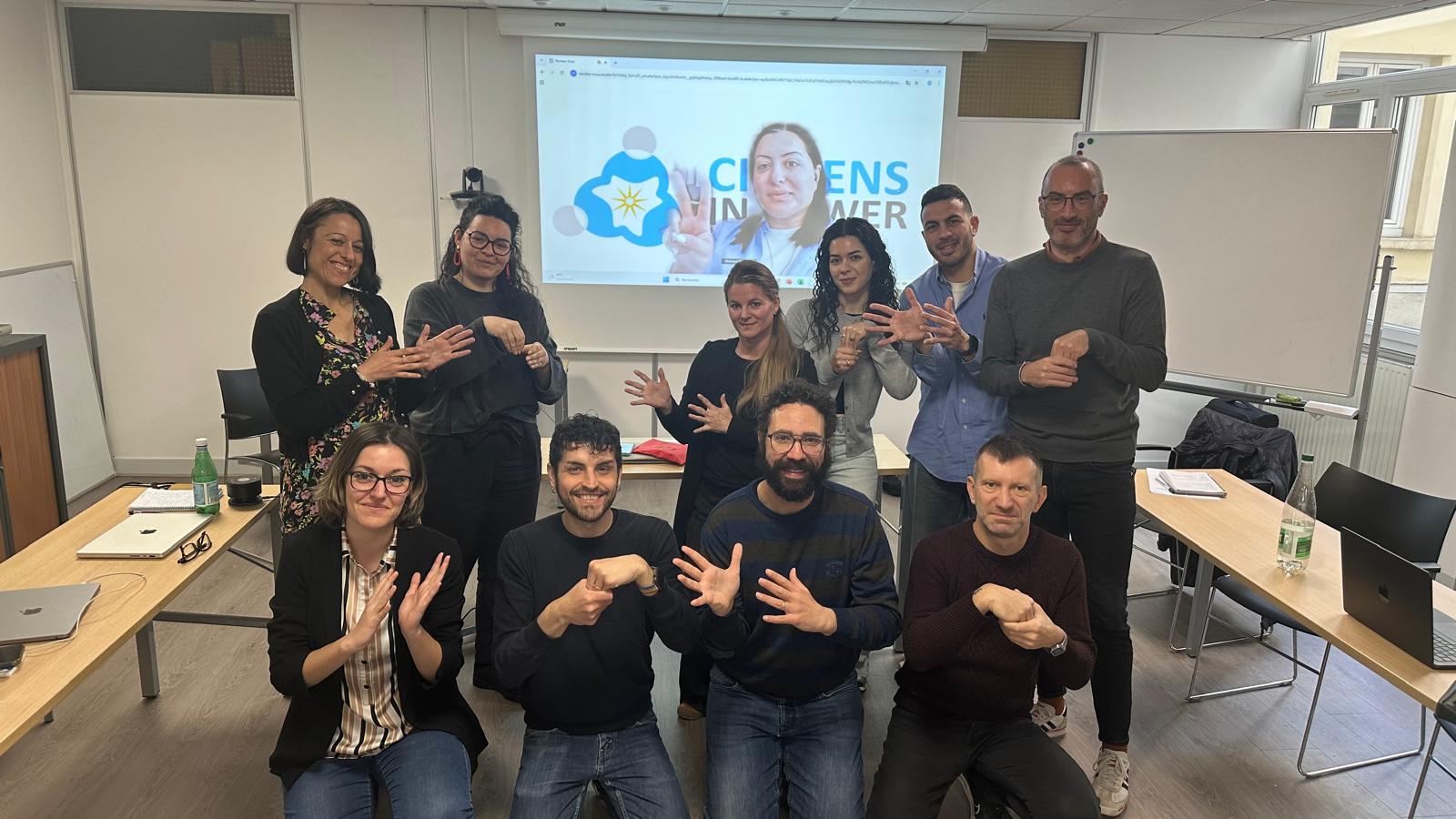
After 28 months of collaborative research, creative development, and community engagement across France, Italy, and Cyprus, the SIGN2Inclusion project proudly celebrated its conclusion with a Final Transnational Partner Meeting and a Final Conference hosted in CNRS offices in Pars, France. The event brought together more than 50 attendees including project partners, educators, researchers, Deaf community members, students, parents, linguists, and policy stakeholders to reflect on the journey, share the outcomes, and chart the path forward.
A Fitting Close to a Transformative Journey
The Final Conference was, by every measure, a tremendous success. Partners from CNRS, Fondazione Istituto dei Sordi di Torino, Università degli Studi di Torino, RITE, Citizens in Power, and ANPES came together alongside teachers of the Deaf, Deaf researchers, secondary educators, teachers of the deaf, and community advocates to celebrate what had been achieved together.
To ensure full accessibility and meaningful participation for everyone in the room and online, The event was supported by two teams of professional interpreters: one providing International Sign/English for our transnational audience, and one providing French Sign Language (LSF)/International Sign (IS) for local participants and the wider French Deaf community. Conversations flowed naturally across languages, modalities, and cultures exactly the kind of inclusive space the project was designed to champion.
Deafness as Identity, Not Deficit
A guiding principle throughout SIGN2Inclusion and one that shone through at the Final Conference has been our commitment to recognising deafness as a rich cultural and linguistic identity rather than framing it through a lens of deficit. Sign languages are full, natural languages. Deaf communities carry their own heritage, values, and ways of knowing. Throughout the project, Deaf researchers, project managers, teachers, and students were not simply participants but co-creators, shaping every phase of the work from needs assessment to lexicon creation to the design of the Virtual Museum.
This identity-affirming approach informed the way we selected terminology, recorded sign language videos, built pedagogical materials, and engaged with schools and families. It is, we believe, one of the most important legacies the project leaves behind.
Project Outputs: Freely Available, Built to Last
All of the project’s outputs are now openly accessible on our website https://sign2inclusion.com/ and attendees at the Final Conference had the opportunity to explore, test, and engage with them directly. The main deliverables include:
- The SIGNup Pedagogical e-Guidebook for teachers of the Deaf, offering practical methods for introducing new signed terminology in secondary STEM classrooms.
- The “Accepting the Signs” Needs Assessment Report, a scientific study on DHH communities’ access to Environment and Emerging Technologies terminology across partner countries.
- The SIGN2Inclusion Multimodal Lexicon, featuring over 60 new terms in Environment, Climate Change, and Emerging Technologies each presented with sign language videos, visuals, and accessible text in French, Italian, Cypriot, and International contexts.
- The SIGN2Inclusion Virtual Museum, an immersive, accessible 3D learning environment where DHH students can explore new terminology through interactive exhibits and phenomenon-based workshops.
- A peer-reviewed scientific publication comparing neologism creation strategies across three European sign languages.
- An Implementation Guide for schools and educators wishing to adopt the materials in their own classrooms.
During the conference, participants engaged enthusiastically with each of these outputs; trying out the Virtual Museum, browsing through the Lexicon on their phones and laptops, and discussing how the resources could be adopted in their own schools, institutions, and communities. The energy in the room made clear that SIGN2Inclusion is not ending with this conference; it is entering a new phase of life in the hands of teachers, students, and Deaf communities across Europe.
Looking Ahead
The partnership extends warm thanks to every educator, interpreter, researcher, student, and family member who contributed to the project. The materials will remain freely available on sign2inclusion.com, and partner organisations are committed to continuing the work of making STEM education genuinely accessible and affirming for Deaf and Hard of Hearing learners across Europe.
The conversation continues and everyone is invited to be part of it.